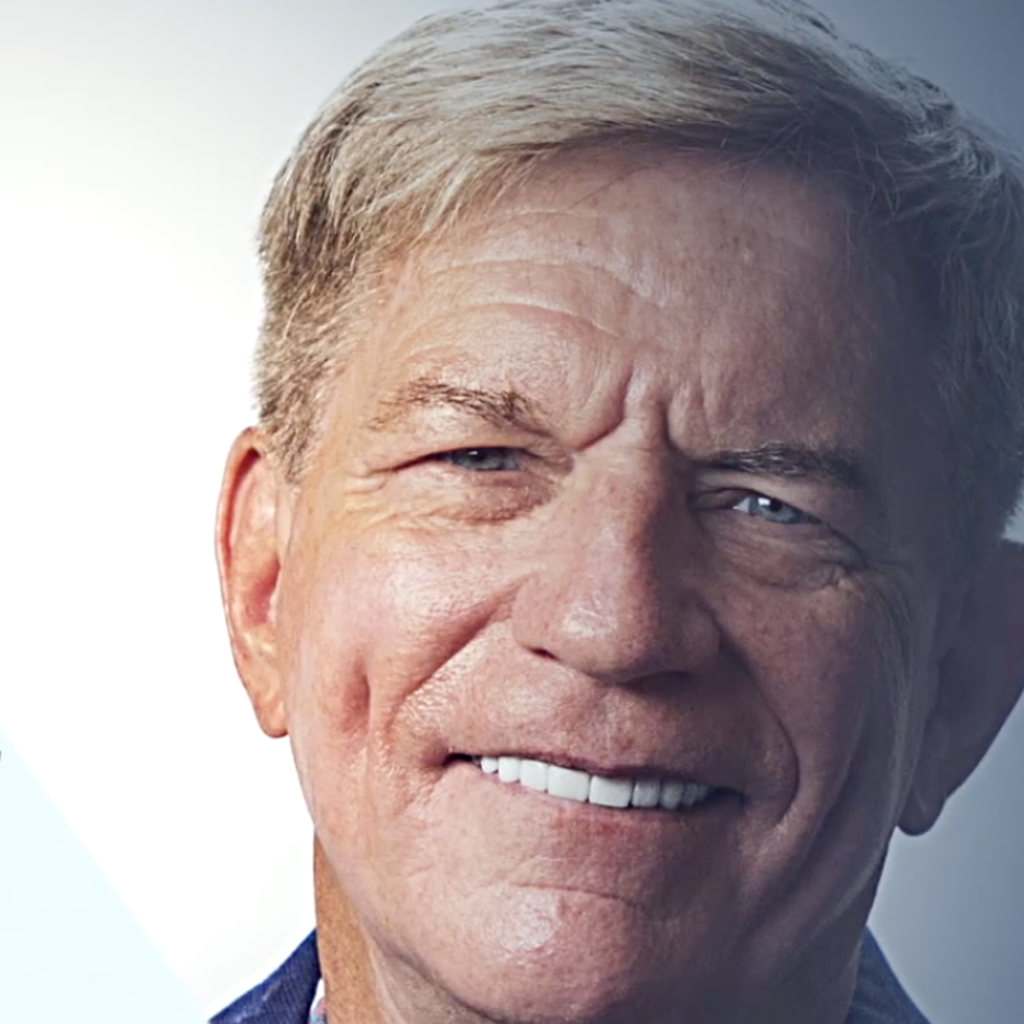
Passion: Give up on giving up
How do we acquire passion? That thing that excites us with undeniable enthusiasm. That thing that we think about to exhaustion and talk about way beyond the duration of anyone's patience for listening. How does this passion capture our essence 24/7? It is exciting and challengingly frustrating and not surprising is a word that formed in early centuries derived from the Latin word for "suffering".
If I was asked: "What would you say if you could leave one wise pearl for mankind?" I would say: "Find your passion and follow it. And never ever let anyone or anything pull you off that path."
I wanted to be a doctor from my earliest memories which is strange because I came from a middle-class family living in a small 3-bedroom, 1 bathroom house with four other siblings, 2 parents and an elderly grandmother in a wheelchair. We didn't know doctors or nurses or anyone medical and frankly outside of required vaccinations for school, no one in my family went to a doctor unless something was bleeding badly or broken. Even with those circumstances there was no guarantee.
Primary school was relatively easy for me, and I attribute that to being the youngest of five kids which inevitably exposed me to "school" way before my first grade. I have no idea why I "wanted to be a doctor" and the only certainty I knew about my ambition was that I needed to make good grades. That determination never left my intentions. I graduated high school with a lot of honors.
I took "placement exams" when I started college and received college credits for math and foreign language. I was a finalist in the Tennessee state Latin tournament in high school and if nothing says "OMG what a nerd", that should. I started college as a "premed student" at a mid-sophomore level. I was the unsinkable Titanic with my passion ship. "I'm going to be a doctor path" with a calculated two and half years before I would apply to medical school.
College was academically relatively easy for me. But I discovered beer, nonstop parties, all-night sessions with friends and "disco" dancing until the sun came up. I rarely attended classes and borrowed notes from friends to prep the night before for most exams. I never dismissed my necessity to make good grades, and I never stopped wanting to be a doctor. I just made some stupid choices and honestly, I am okay with that. I was a college student. My GPA was over 3.7 and I used to laugh and say that 3.7 was more indicative of the number of days I attended classes outside of required exams days.
But this is where I hit my iceberg. If anyone is premed, or even if you know someone who is, you are aware that the chopping block for premed students is organic chemistry. This is the make it or break it class and where the road ends for about one third of medical school wannabes. And I took that class seriously. I attended every lecture. Anything less than an A would be fatal for my goals. It was college final exam week before Spring Break. Thousands of college kids were headed to Daytona Beach after completing exams. All my friends last finals were over mid-week, Wednesday. This enabled leaving two days earlier than most. Except my organic chemistry final was on Friday. I called my professor and told him, "I am sick". We left for Daytona Wednesday. My make up exam would be scheduled for later.
I received my semester grades' report and per usual they were respectable. My organic chemistry course had an "I" for incomplete. I was already into the next semester taking organic chemistry never missing a class while never missing "all-nighters" with kegs and friends and sunrises. And I received a letter in my mailbox. I had missed the make-up exam for my first semester procrastinated organic final. My I was changed to an F.
I graduated from college with honors. I took the MCAT and scored below average which reflected my cramming for the past years' exams. I applied to medical school with an F in organic chemistry. It didn't matter that I took the course over and did well. This was the make it or break it class. I had an F. And not surprisingly I received a letter from the admission board that I was not a qualified candidate for consideration. And I was dissuaded from ever applying again. The medical school offered me "counselling" for choosing other professions.
I wasn't as crushed as you might think when reading this. I expected this outcome. I deserved this outcome. And I was honest with myself. In full transparency I never felt I was ever good enough to really be a doctor. Not as a kid with a fantasy, not as a focused high school student, and not as a normal college kid living normal college life.
I was offered a job as a chemist. The irony is not lost on me. And I remember being in my twenties and someone would ask: "what do you do?" and I would reply: "I'm a chemist". And I thought: "hey that sounds pretty good". But let me summarize that job for me. Those pastries that can be viewed through a European patisserie shop that are decorated like works in an art museum make your mouth water which prompts an inevitable trip inside. And with a bite: "ewwwwww". That job for me looked good but didn't taste well.
During those two years I could never stop thinking about wanting to be a doctor and some stupid choices I made along the way. Those thoughts never left my mind. I was hoping they would. And I began to understand why the word passion was derived from the Latin word for "suffering".
I calculated a strategy. I approached HR at the chemical company and requested to work the 12 hour shifts from 6 pm to 6 am Friday through Sunday since a chemist was required to be on site for any quality production issues. That freed up my Mondays through Fridays and allowed me to return to school. I considered a Masters-PhD program, but if I started any program I would have been expected to complete that before medical school eligibility. That could require two to three years. I went to the college registrar and asked if I could take PhD classes and be given "grades" with no credit for any further degree. Any grades would not change my previous GPA from my already achieved Bachelor of Science degree. They agreed and classified me as a "special undergraduate" and likely thought I was crazy paying for classes which offered no observed benefit to my resume.
I decided to commit one year to over-the-top intense academic work to prove my abilities. I chose PhD level classes in P-Chemistry, analytical chemistry, biochemistry, molecular genetics, and anything that looked impossible and impressive. I booked more hours in classes than would ever be recommended for any student's semester. My classes contained four to six students only instead of previous full auditoriums. They were so small we frequently met in the professors' offices or labs and even their homes instead of chalkboard classrooms.
I was commonly asked: "Why are you here?" And I would reply to my professors: "I want to go to medical school. I want to take your class and make an A and impress you enough to write me a supporting letter of recommendation for medical school." One professor told me: "No one gets an A in my class. And I don't write letters". I proved him wrong on both.
I approached my previous genetics instructor and begged to work for free helping her in her research work. We bonded and I became heavily involved in her research measuring varying doses of radiation effects on the bone marrow. The main job I was assigned was to go into a lab room around midnight which housed 100 cages of mice. The room was dimly lit with only infrared lighting, so the circadian rhythms were not disturbed. I had to pick up each individual mouse and stick a glass capillary tube into their eye right against their noses into their suborbital sinuses where the capillary tube spontaneously filled.
Let me clarify I like to fish, but I will never touch a fish. And holding 100 mice individually each night from Monday to Thursday to stick glass tubes into their eyes was so far out of my comfort zone, even today I cannot believe I did that. Be certain of this: after that first night these mice were not happy when I walked into the lab. We gathered data and I traveled with my genetics professor to other colleges to present these findings to other academicians. I was so honored when only after a couple of presentations, she handed me the slide tray and asked me to give the lecture. My genetics professor had advanced MS and I was so inspired by her passion and intelligence. I wish she was still here to read how significant a role model she was to me, but I am comforted — she knew.
If you are doing the math here, you will realize that after working all day Friday with my new classes I had to drive to work the graveyard 12-hour shift. And on Sunday after working the graveyard shift, I had to drive back to my classes on Monday. I couldn't have realized at the time this was perfect training for my future career in obstetrics.
Let me continue with more of my "calculated strategy" for my redo apply to medical school. The medical school admissions board who reviewed all applications was a group of about ten to twelve members. The "director" was a physician, military trained, who was staff and professor for the Children's Hospital in Memphis. I knew his name only. I went to the "Volunteers Department" there and asked if I could be a volunteer on Saturday afternoons and I was accepted. The only reason I did this was in hopes of somehow meeting "the director".
I wore a dark blue coat shirt with a name tag "William Summers Volunteer". Let me describe the duties of a children's hospital volunteer. I was assigned to the emergency room where I was in the patient waiting room available to show someone where the restrooms were. After the medical staff became familiar with me, I became the coffee and soda runner for all the employees on the clinical side. I loved this assignment most. It gave me the opportunity to walk through the hospital halls where I was constantly on watch for "the director". I made sure my name tag was visible on every trip. I never even saw him. Not one time.
I showed up every Saturday in hopes that the "director" would just casually see me or my name tag. And I became a Saturday volunteer staple and worked until I left for my graveyard shift at the chemical plant. Familiarity breeds comfort. When the staff was busy with patient overloads I was invited back into the clinical area to help obtaining vitals for patients. Unexpectedly some trained me on very minor procedures. Occasionally I was asked to help them with bandages or holding infants so their ears could be examined. All of this was because the emergency room was busy and frequently short staffed and I was a body they were familiar seeing. The volunteer department was very happy to write me a letter of recommendation for medical school. This was my secondary goal. Meeting the "director" was my primary goal.
I made straight A's in these classes. I was involved in research, having lunch and meetings with faculty, working weeknights overcoming my fears of mouse phlebotomy, working Saturday as a volunteer and all the while working 12 hour weekend shifts so I could pay my bills. I retook the MCAT with a more impressive score. And I diligently filled out an application to my state medical school after a year of all of this.
I was called for my interviews and honestly felt very confident that I was competitive and had demonstrated a compilation of hard work and diligence. My interview was with the director of chemistry for the medical college. He could not get over my F in organic chemistry. He wasn't nice. He was doing his job.
I was always told that if you are accepted into the University of Tennessee Medical School there will be an oversized orange envelope that would look like an orange poster board stuffed in and hanging out of your mailbox. Every day I drove home, I turned the corner onto my street and could immediately see my mailbox several houses down. I fantasized that an orange envelope would be there. I already knew that a rejection letter would be in a well fitted plain white envelope.
I pulled the white envelope out of my mailbox with the University of Tennessee return address seal. I was crushed. I was defeated. I cried. And I picked myself up knowing I did the best I could do and I would manage this chemistry job or another job with a different attitude. And I reconciled "it was over". I was twenty-five years old. I needed a Plan B which I had never entertained.
I finished the graveyard shift Saturday night and returned to my house. I often tried to stay awake and watch "church" on Sunday TV. I am from the Southern Bible Belt but have never been a holy roller. I found and find calmness, encouragement and peace connecting to my God and I routinely watched a national TV service early on Sundays after my shift.
On this morning I remember feeling defeated. I had moved on from denial and anger to acceptance. I literally told myself "I give up" with no rebuttals. It was September and the freshman class I was denied was in full bloom.
I was waiting for Dr. Adrian Rogers to appear on my TV screen for my Sunday sermon. I fell asleep waiting. And I woke up to a TV inches from my face and all I could see was his face closing his sermon. And he was almost yelling, finger pointing: "Don't give up, don't give up". It haunted me. I had no idea the context of his sermon. This is weird to describe. I felt like he was talking to just me. I recalled that I felt like I was being told: Don't give up. Apply again.
Medical school applications begin in October. I was not thrilled or energized at all about possibly reapplying to the school that said no twice. My attitude was so pathetic, but I felt like Dr. Rogers — or more so, God himself — told me to do so. And honestly no one would want to say "no" to either of them.
I took my old carefully sculpted application copy and used "white out" to change the date on the paper. I stopped by the admission office instead of mailing it and just threw it on the receptionist desk. And thought: OK God, I did what you said. It was mid-October.
Halloween night, a Saturday, I decided to go "volunteer" at Children's Hospital just to get out of the house. All of my special undergraduate classes and research and even the volunteer position was over for me, but I just wanted somewhere to go.
I wasn't there long when one of the scariest emergencies I have ever witnessed began to ensue. A 6-month-old lifeless dark blue baby was brought in by parents frantically running to the ER desk. The baby had status asthmaticus which would not allow this baby any oxygenation and the medical team operated in a hurried coordinated effort to immediately begin support.
I heard my name called from a couple of the doctors from the back room. They needed me to help get supplies from cabinets. The senior doctor there couldn't find a vein for IV access and was left to perform a "cut down" — the doctor takes a scalpel and opens the skin over the wrist to identify a vein to place the IV. He called my name and asked me to put on sterile gloves. Clearing his view by dabbing sterile gauzes into this bloody wound was something that anyone with no training would know to do. He motioned for me to grab sterile scissors to cut the suture as he closed the wound.
Suddenly the baby was pink and moving. He was intubated and had IV fluids flowing. I'll never forget the genuine relief and celebration from everyone in that room. The excitement was indescribable and their training and precision literally brought this baby back to life. For me, just witnessing them was a privilege.
I felt a tug on my shirt. I looked up. I was unaware the "director" — the chairman of medical school admissions, the man I had been wandering around the hospital over a year hoping to spot — was in the room the entire time. He pulled my name tag and read: "William Summers, Volunteer". He did not speak a word to me but held my gaze for several seconds. I was probably the only one more surprised than him that I was involved in any part of this.
Two weeks later in early November I was driving home on a routine day. Most likely I was wondering what was in the fridge to eat. And I was probably 3 to 4 houses away when I became overwhelmed by a feeling that consumed me. A feeling I will never forget. There was the largest orange envelope, stuffed into and hanging out of my mailbox.
As medical school graduations all go there is a program of announcements, recognitions, awards and diplomas delivered. The faculty sit in large wooden throne-like chairs on the stage all dressed in long dark robes with long hanging gold embroidered collars. Every individual on that stage deserves the highest respect for their work, dedications and contributions. It is nothing short of a privilege to have been their student.
The Dean of the College of Medicine approached the microphone for the last award and believe me, everyone in that room was past ready to jump to the exit doors. He announced my name and I thought: damn, I better pay attention. And he announced to the auditorium that I was receiving the Faculty Medal for Academic Achievement for the highest GPA in my class. This award was not printed on the bulletin we had been given. I had no clue this was coming. And the faculty on the stage stood up from their seats and gave me a standing ovation. I approached the stage in disbelief. I looked out at my student colleagues, and they were standing and clapping and whistling.
There I was standing speechless gazing at this row of faculty. The man who told me I would never get into medical school with an F in organic was standing and clapping. The man who suggested I choose another field outside of health sciences, the same. And they were smiling and clapping and I was so grateful for the validation. Simultaneously I was so thankful some told me "No, you can't. You never will". I was gestured to the stage to join them in one of the throne seats. And I looked at them forever grateful and I looked at my colleagues still cheering. And I looked at the faculty again and turned and walked off the stage to return to my original seat. This was not my award. This was our award. There was not a single student in that class of almost 200 who I had not shared experiences and from whom I had not benefitted knowing.
So, I will answer my own question I asked at the beginning of this story. Where do we acquire our passions? There is a verse from Psalm 37:4: if you "delight yourself in the LORD" He will align your desires with His will and fulfill them. And if God has a list for us, like all lists made, there are usually top priorities. And I truly believe our passions are his top priorities for us — and that is why we have an enthusiasm beyond understanding for something, even if it means we may suffer getting there.
Spoiler alert: I have more passion within this realm of the chronic disease of obesity than I have ever had for anything else, including becoming a doctor. And I want to be an educator sharing my education and experiences. I want to eliminate bias and stigma for anyone dealing with obesity. I want to be an advocate for equal access for all of us for any medical consultations and for access to all appropriate options for management. And I want everyone to absolutely know with undeniable certainty that he/she/they/them are perfect and deserving of respect and dignity, equally. To affirm our differences are amazing and should be celebrated. We are ALL already beautiful. Spreading education regarding the chronic disease of obesity with evidenced based options for individual personal selections enabling the highest quality of life: that is the goal.
I am not sure where this road goes from here. But I am trekking on it. And I have already spoken beyond any normal person's patience for listening. And per my history, I'm not giving up even if I want to. I hope my course shares my compassion and sincerity. I am also hopeful this road won't involve mice, stalking and sleepless nights. But if so, I'm in.
Just being here, I will use another Latin derivative, is a privilegium.